

How to Recognize a Quality Suit — 6 Essential Criteria
Choosing a men’s suit requires paying attention to several elements, including the fabric, finishes, and lining. Our experts at Ernest explain all the essential criteria to consider when looking for a quality suit.
Whether it’s to create a favorable impression in a professional setting or to stand out at a special event, wearing a suit allows you to feel confident and elegant. However, when faced with rows of garments in a store, it’s not always easy to recognize a quality piece. At Ernest, we are well aware of the details that distinguish a well-made suit from a cheaper model, namely:
- The quality of the fabric;
- The finishes and clean stitching;
- The lining, which adds structure and comfort;
- The characteristics of the buttons;
- The cut and smooth drape;
- The reputation of the brand and its origin.
Wondering how to choose a quality suit? In this article, our experts present the key features to consider while shopping.
1- The fabric
The fabric is crucial in identifying a high-quality men’s suit. How do you choose between wool, polyester, or a blend of both? It all starts with distinguishing between natural fibers (cotton, wool, linen, silk, hemp, cashmere) and synthetic ones.
First and foremost, natural fibers are preferred for their breathability and comfort. Merino wool, in particular, is among the best fabrics for high-end suits.
On the other hand, polyester, a synthetic fiber produced through chemical processes (such as nylon or acrylic), is often used to reduce manufacturing costs. Its main advantage is that it is easy to maintain. However, it tends to retain heat.
Blends of natural fibers and polyester offer an interesting compromise, but their quality depends on the fiber proportions. The higher the wool content, the more premium the fabric is considered. When searching for a quality suit, it’s best to avoid entry-level 100% polyester fabrics and opt for the benefits of 100% wool suits. That said, note that a polyester lining is perfectly appropriate in a wool suit.
2- Finishes and stitching
How can you tell if a suit is well-made? “The devil is in the details,” as they say! To assess the quality of a men’s suit, the finishes and stitching of the jacket—both inside and out—as well as those of the pants, pockets, belt loops, etc., are essential. They should be clean, consistent, and well-aligned. The lapels should be perfectly finished from edge to edge, without irregularities.
3- The lining
Enhancing the structure and durability of a men’s suit jacket, the lining is a sign of quality that is too often overlooked. There are several types of linings made from various materials.
A well-integrated lining adds comfort, structure, and insulation to the garment. Unlined suits, on the other hand, intentionally create a more casual look and should therefore be avoided for more formal events.
For those seeking the ultimate in luxury, a “full canvas” construction is ideal. This involves adding an extra layer of textile, a technique used by tailors to create bespoke suits.
More specifically, a fully canvassed jacket incorporates a canvas made of wool and horsehair sewn between the outer fabric and the inner lining. This canvas runs the full length of the jacket, from the shoulders to the hem, including the hand-stitched lapels. This construction gives the jacket its structure, ensures excellent shape retention, and allows the lapels to sit elegantly. Horsehair makes the canvas both flexible and durable, helping the jacket maintain its shape while remaining comfortable.
A half-lined or “half canvas” suit, on the other hand, features lining on the front and back of the jacket as well as in the sleeves. It is a better option in warm weather. However, it is more prone to wrinkling.
4- Buttons
Buttons are another revealing detail of a suit’s quality. They can be made of horn, plastic, or metal. Highly durable and associated with high-end tailoring, horn buttons (e.g., from horse or buffalo hooves) stand out for their subtle color variations, natural texture, and low sheen, giving them an elegant, classic look.
In contrast, plastic is often more uniform and shinier, which can indicate a lower-quality garment. There are also polyester buttons that convincingly mimic horn. Metal buttons, meanwhile, are rarer and reserved for certain bolder suit styles. Another detail not to overlook: a hand-stitched buttonhole, recognizable by its cross-stitch pattern. Finally, a shank button, a technique where thread is wrapped to slightly raise the button, allows the jacket to close without pulling on the fabric.
Cufflinks, worn at the wrists of a dress shirt, add a touch of refinement to any suit. They come in various metals such as stainless steel, platinum, copper, titanium, gold, onyx, or silver, as well as in fabric, wood, glass, or leather.
5- The cut and drape
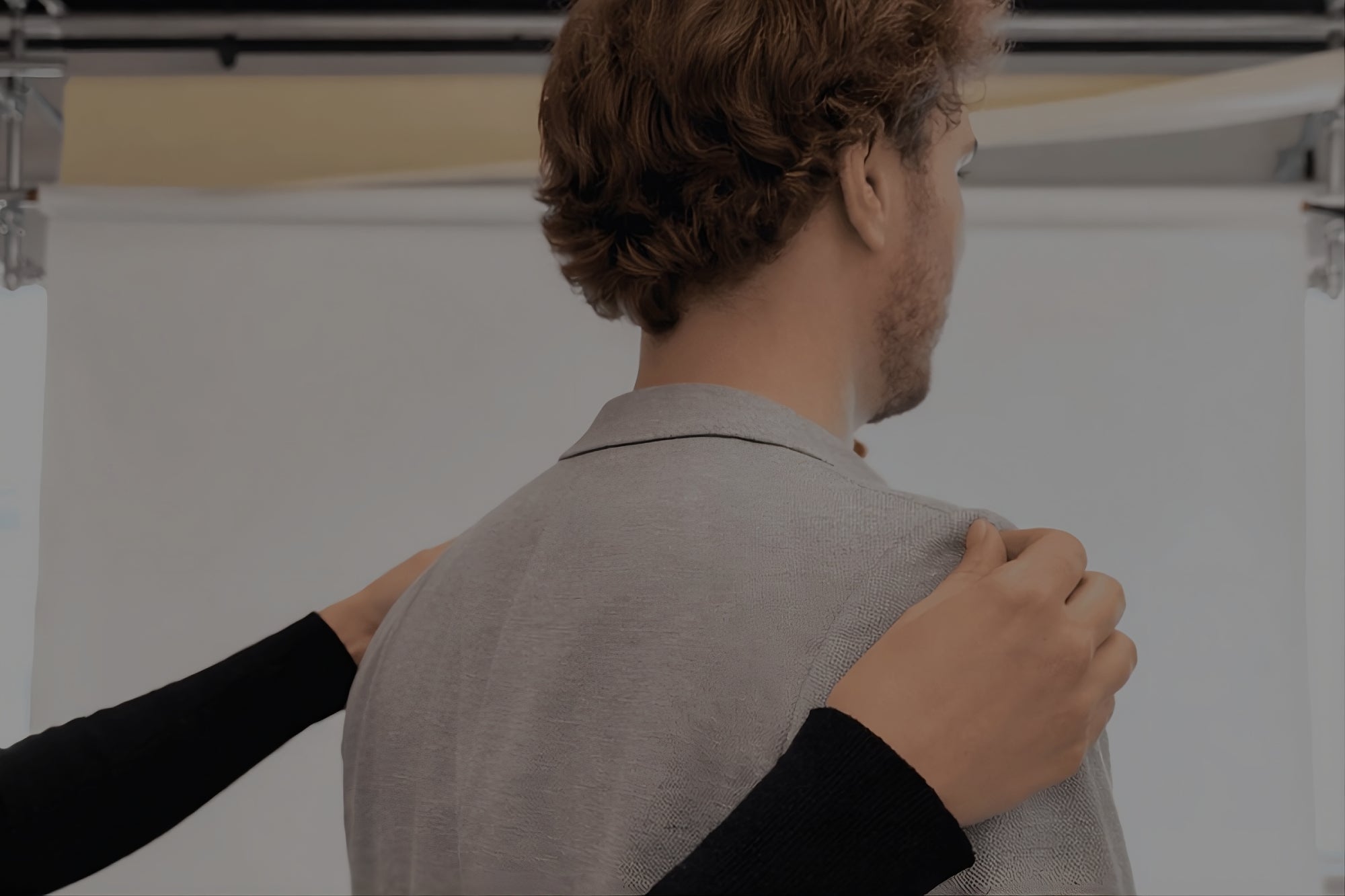
The cut and drape of a suit are essential criteria for identifying a quality garment, as they directly influence how the suit fits a man’s body and enhance his silhouette. A well-fitted suit naturally follows the body’s lines without restricting movement, with well-defined shoulders, a slightly tapered waist, and sleeves that reveal a bit of the shirt cuff. The trousers should break properly on the shoe for a polished look.
Whether at the shoulders, seat, or crotch, a smooth drape shows that the cut has been well designed. These elements improve posture and boost the wearer's confidence, as a carefully designed garment moves with the body rather than restricting it. Conversely, wrinkles, gaps, and pulling are signs of a low-quality suit.

6- The brand and origin
Finally, the suit’s brand (label) and origin can reveal a lot about its quality. For example, men’s clothing from well-known brands such as Au Noir, Anthony of London, Orvieto, or Marco Ferrera, all available at Ernest, is generally a safe bet. Suits from Canada or Italy also tend to stand out.
Ready-to-wear or custom-made: what’s the difference in quality?
Suits sold in stores fall into the ready-to-wear category. They are made using standard-size patterns, making them the most affordable option. Custom-made suits, on the other hand, are created for you either from an existing pattern (made-to-measure) or entirely from your own measurements (bespoke). The latter is the most expensive option.
The good news is that, regardless of your budget or the suit you choose in-store, it can be altered to fit you perfectly. At Ernest, we offer an affordable in-store tailoring service. Treat yourself to the perfect fit!
How does the Ernest team select its suits?
At Ernest, we only select quality suits that we would proudly wear ourselves. We prioritize renowned brands known for their durability and stylish, refined appearance. Visit one of our stores to find the suit you’ll be proud of.
To extend the lifespan of your purchase, check out our detailed care guide.
What is the minimum cost of a good suit?
There is no single answer, as it depends on how you plan to use it! A suit for everyday office work will not cost the same as a gala outfit or a wedding suit. That said, we estimate that a good quality suit typically costs between $250 and $500.
FAQ: The Most Frequently Asked Questions About Suit Quality
What is the difference between a wool suit and a polyester suit?
A wool suit is associated with high-end tailoring. More expensive than a polyester suit, it is also more breathable and more elegant.
How can you check the quality of a lining?
A quality lining allows the jacket to be put on easily and to move naturally with your body. It should be smooth and flexible, with clean stitching, free of wrinkles or tension.
Is an expensive suit always better quality?
Price is often a good indicator of a suit’s quality. That said, you should assess the overall construction (fabric, finishes, etc.) and look into the brand’s reputation before making a judgment.
What is “full canvas” construction in a suit?
“Full canvas” construction is associated with a high-end suit. This means it includes an additional textile layer made of wool and horsehair, giving it superior structure.

Sarah Madejchuk - Marketing & Communications Director
"At Ernest, every blog article is the result of a collective effort driven by a passion for men’s style. Our team—made up of specialists in writing, art direction, and styling—creates content that reflects the essence of our brand: thoughtful, accessible, and always relevant style."
"We believe that every man deserves to feel confident and comfortable in his own skin, and our blog’s mission is to accompany him through life’s key moments—from everyday life to special occasions. This platform reflects our family-oriented approach, our sense of closeness, and our commitment to sustainable, authentic style."
OTHER TEAM MEMBERS:
Nina Say: E-commerce Coordinator
Mauricio Gomez: Senior Graphic Designer
Audrey Morin: Creative Content Designer
See other articles

Men’s Spring-Summer Clothing: Discover the 2026 Trends
SUMMARY MINIMALIST REFINEMENT COLORFUL SUITS STRIPED POLOS VACATION-INSPIRED PATTERNS THE SEASON’S LEADING SHOES SMART CASUAL STYLE PASTEL SHADES ARE HERE TO STAYEVOLVING ACCESSORIES Lookin...
Read more
How to Wear a Men's Suit Properly: The Complete Step-by-Step Guide
If you're wondering how to wear a suit properly, know that you should first focus on its fit. That's precisely why we offer an alteration service in our stores! Packed with tips from our Ernes...
Read more
DISCOVER THE TRENDS

Leave a comment
This site is protected by hCaptcha and the hCaptcha Privacy Policy and Terms of Service apply.